September 4, 2026
modernAKIS at IFSA 2026: Advancing Capacity Development for Transformative AKIS
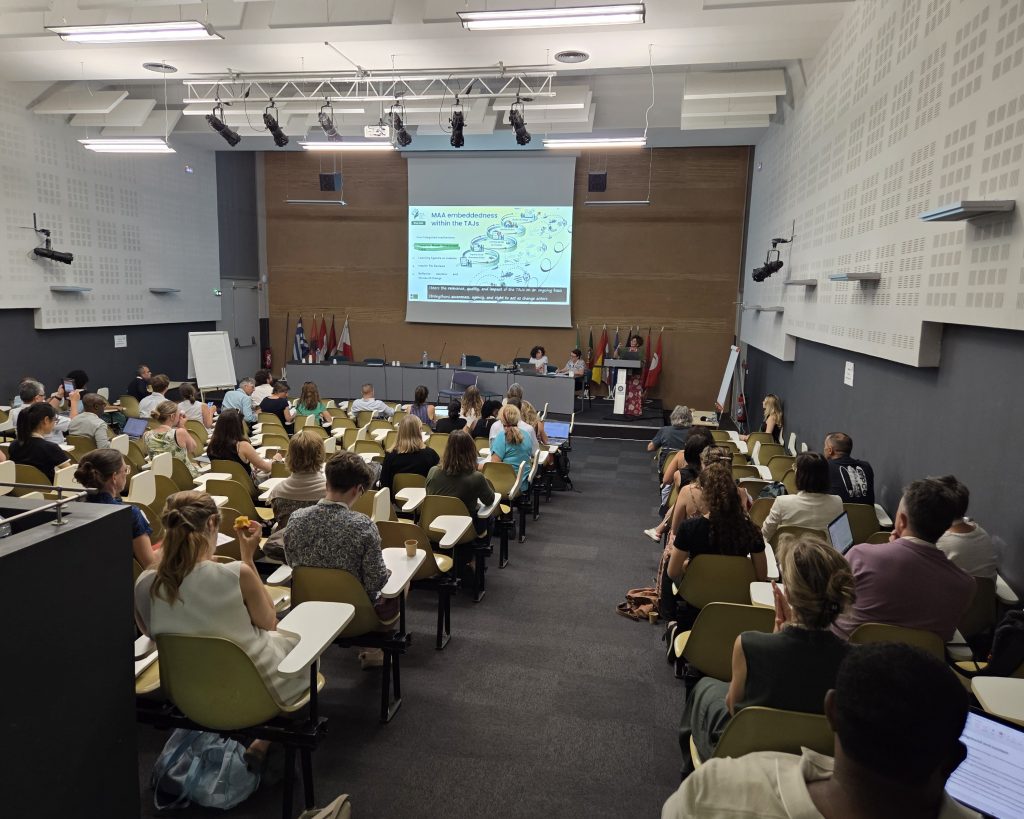
The IFSA 2026 Conference in Montpellier brought together more than 300 researchers, practitioners, advisors, and policymakers from around the world to exchange ideas on the future of sustainable agriculture and food systems. As a project committed to supporting the transformation of Agricultural Knowledge and Innovation Systems (AKIS), modernAKIS actively contributed to this global dialogue by sharing research findings and facilitating collective reflection on methods and tools for capacity development that can enable systemic change.
At the conference, the modernAKIS consortium presented two scientific contributions:
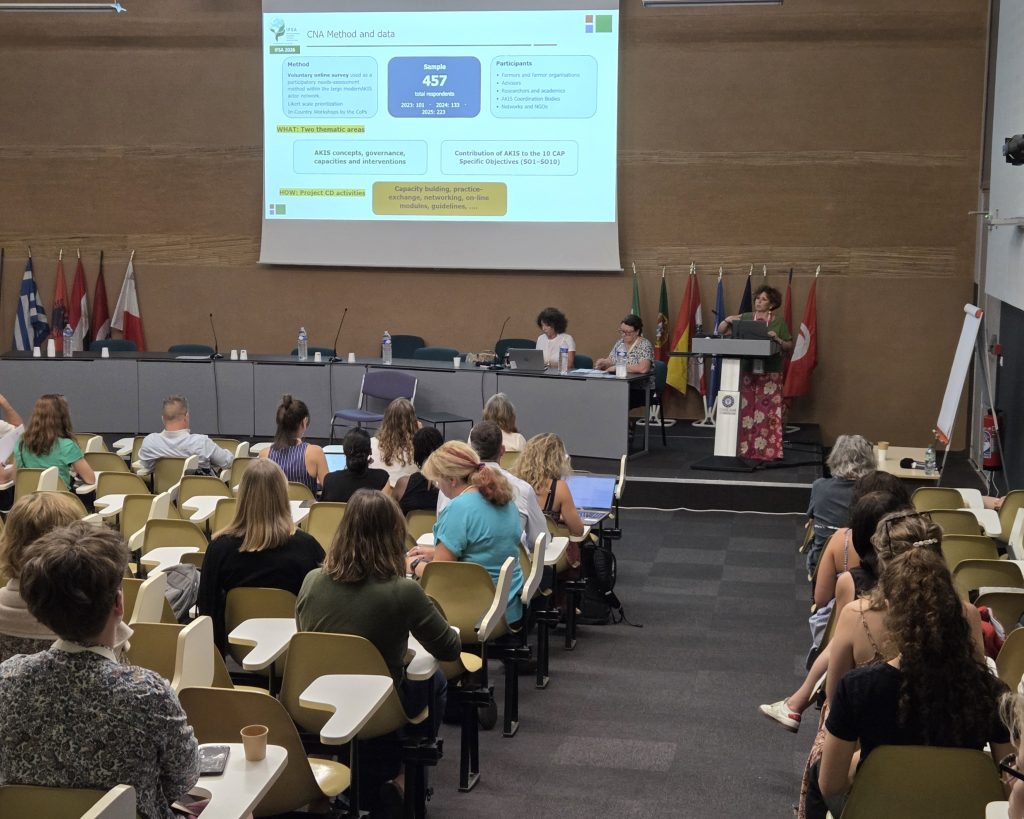
“Assessing Capacity Needs in European AKIS: A Multi-Actor Perspective”
Presented by Simona Cristiano, co-authored by Valentina Carta, Edward Kyei Twum, Livia Ortolani; this paper introduced the Transformative AKIS Journeys (TAJs) framework Illustrating the multi-approach adopted by the modernAKIS project that is based on an iterative cycle of annual Capacity Needs Assessments of AKIS actors across the European Union, co-construction of dynamic learning agendas, feedback surveys, collective reflective exercises, and socialization of individual stories of change that inspire others.
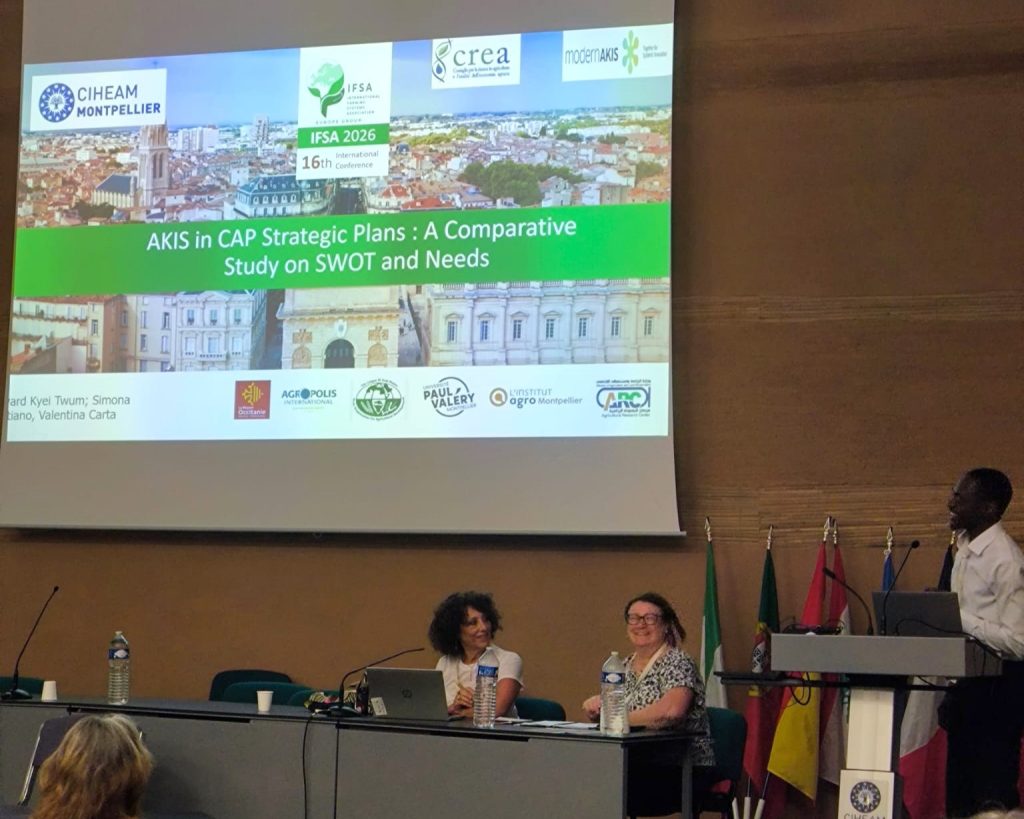
“AKIS in CAP Strategic Plans: A Comparative Study on SWOT and Needs”
Presented by Edward Kyei Twum, co-authored by Simona Cristiano, Valentina Carta; this paper explored a holistic methodology for analysing the SWOT and needs assessments that form basis for AKIS strategies of the 27 EU Member States through the lens of the transformative AKIS assessment framework developed under modernAKIS.
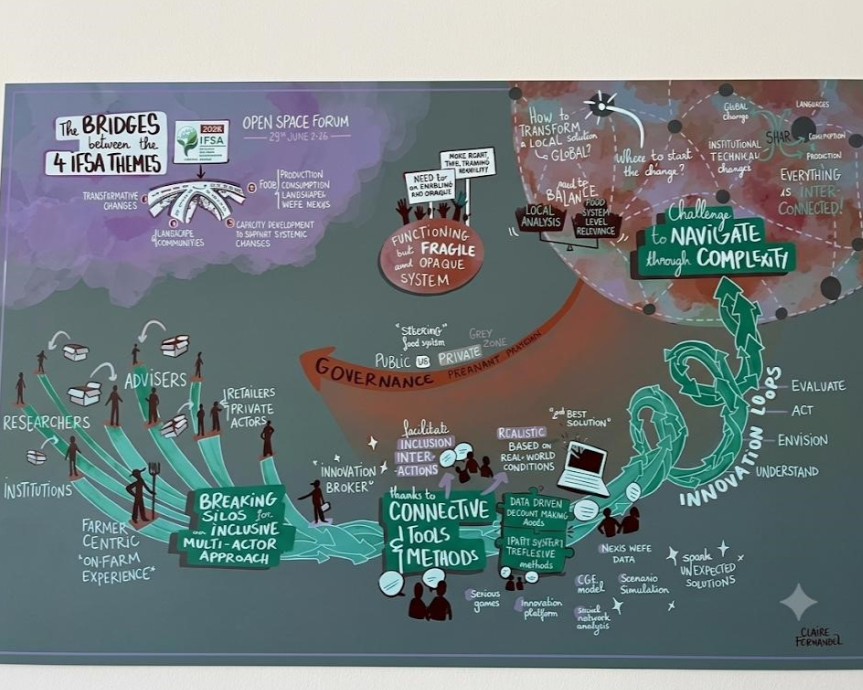
Beyond these presentations, modernAKIS contributed to an inspiring discussion on methods and tools for capacity development supporting systemic change, bringing together experiences from Europe, Africa and beyond. Participants shared a rich diversity of approaches, including Q-methodology for knowledge exchange, learning dashboards, strategic foresight for innovation governance, learning histories, participatory design methods, online farmer communities, social network analysis, innovation support services, approaches for responsible scaling, and methods for identifying overlooked actors within AKIS.
The discussions revealed a powerful common message: the focus should move from tools themselves to the transformations they enable. Dashboards, methodologies, communities of practice and participatory approaches were recognised not as ends in themselves, but as instruments that support learning, adaptation and collaboration.
Several cross-cutting insights emerged from the discussions. Participants highlighted that learning should be understood as a continuous and collective process rather than a reporting exercise. Tools need to help sloops and navigate complexity, strengthen dialogue between farmers and advisors, facilitate feedback loops, and support adaptive management. Co-design and flexibility were repeatedly identified as essential principles, ensuring that methods respond to local needs rather than imposing predefined solutions.
Another key lesson concerned the importance of learning ecosystems. Virtual communities, professional exchange spaces and intermediary actors such as facilitators and brokers were recognised as critical elements for supporting innovation and helping stakeholders cope with uncertainty. Knowledge exchange was viewed as a social process requiring both technical and socio-cultural capacities.
Participants also stressed the need to move beyond linear understandings of innovation. Foresight exercises, mixed-method approaches, co-assessment practices, and collaborative learning processes were seen as essential to address the complexity of sustainability transitions. The discussion underscored that facilitation is often underestimated despite being a decisive factor in achieving meaningful outcomes.
The discussions further explored challenges related to scaling innovation and governance. Participants emphasised that scaling should not be reduced to measuring impacts through indicators alone. Particular attention should be paid to the processes through which innovations spread, the interaction between bottom-up initiatives and institutional structures, and the multiple levels of governance that shape transitions.
One of the strongest messages emerging from IFSA 2026 was that the transition towards more sustainable and resilient agri-food and forestry systems ultimately depends on people, relationships and capacities rather than on tools alone. Across all sessions, participants highlighted the growing need for systemic competencies: the ability to facilitate collaboration, connect diverse actors, support collective learning, manage complexity, and create enabling environments for innovation.
These reflections closely resonate with the vision of modernAKIS. Through its Transformative AKIS Journeys (TAJs), the project is implementing an ambitious capacity development pathway that places the Multi-Actor Approach at the centre of agricultural innovation. By supporting AKIS Coordination Bodies, researchers, advisors, trainers, policymakers and practitioners in developing the skills and mindsets needed for systemic change, modernAKIS contributes to strengthening the foundations of Europe’s agricultural knowledge and innovation ecosystems.
The experiences shared at IFSA 2026 provided further evidence that such investments in capacity development are essential for achieving ecosystem-wide transformations and accelerating the transition towards more sustainable agri-food and forestry systems.